


Note: for the full suite of measurements from the SoundStage! Audio-Electronics Lab, click this link.
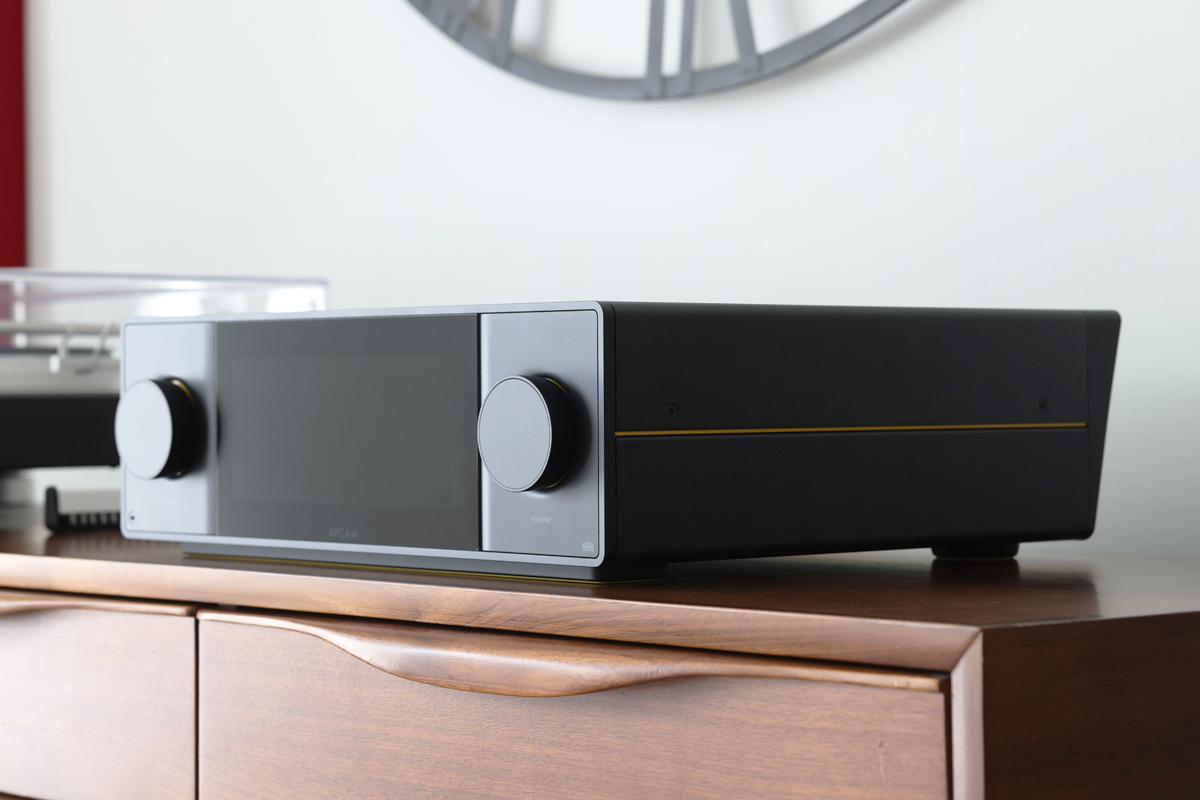
Let’s talk about wants versus needs for a minute, by way of introducing Arcam’s flagship streaming integrated amplifier, the Radia-series SA45 (US$5499.95, CA$7999, £4499, €4998). Do you need the 180Wpc of class-G amplification it delivers? I don’t know your life, but I’m pretty sure you don’t, unless your speakers are brutal loads or your room is downright palatial. Do you need the massive 8.8″ high-resolution display, which stretches to fill the space between the halo-accented volume-control and input-carousel knobs? Probably not. Do you need the sexy Radia industrial design, the hooded back panel, the balanced XLR inputs and outputs? Nope, nope, and nope.
And yet, I look at all of the above and salivate. I want it. Every bit of it. And I don’t think that’s entirely a function of my fondness for the Arcam brand, which I’ve been clear about in previous reviews. With the Radia SA45, the company has created something that, at least on paper, stylishly panders to the proclivities of this old hi-fi junky, yet brings hi-fi fully into the modern world with the addition of two-way Bluetooth 5.4 connectivity with Snapdragon Sound and Auracast, and ethernet and Wi‑Fi connectivity, along with AirPlay 2, Google Cast, Roon Ready certification, and all three relevant Connects (Qobuz, Tidal, and Spotify). The SA45 also features full-bandwidth Dirac Live room correction.
Inside and out
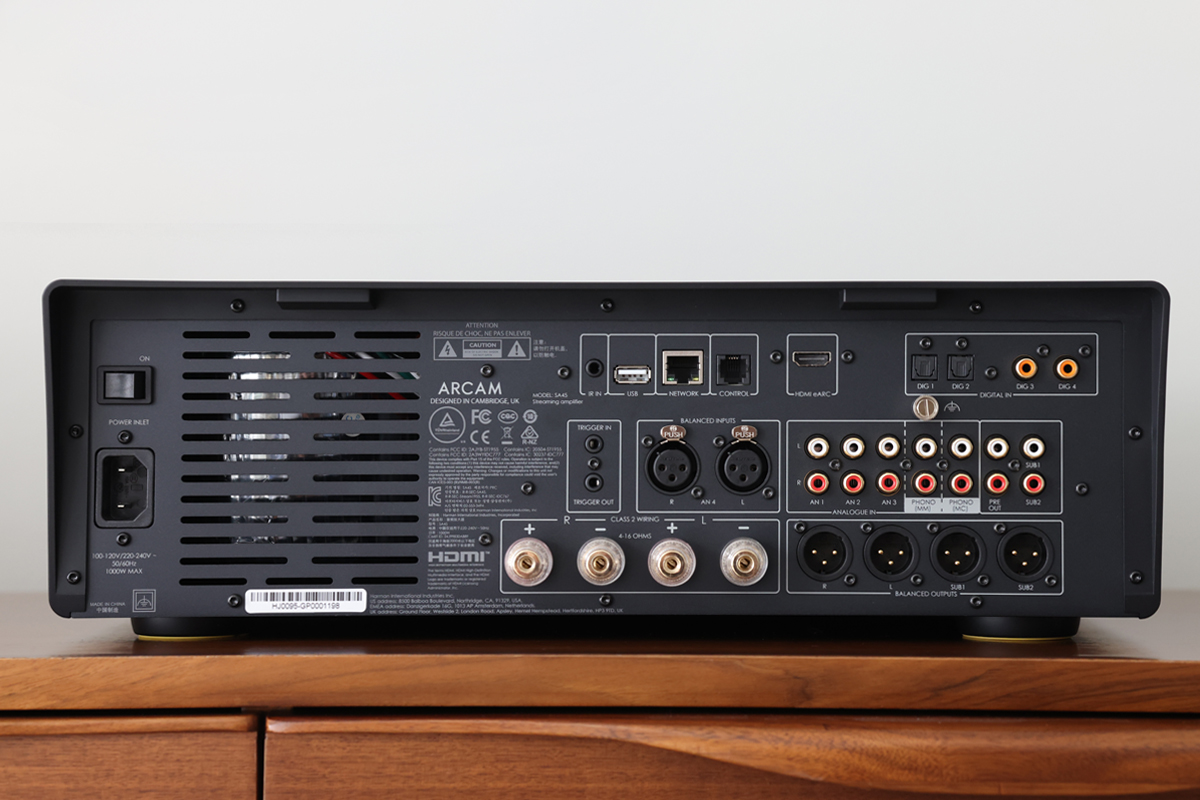
Those hints about the SA45’s connectivity merely scratch the surface, though. It’s utterly packed with physical innies and outies, including one pair of balanced (XLR) and three pairs of single-ended (RCA) line-level inputs, single-ended and balanced preamp outs, separate MM and MC phono inputs (both stereo RCA), two coaxial S/PDIF inputs (RCA), two optical S/PDIF inputs (TosLink), and an HDMI eARC port. The SA45’s physical digital inputs accept PCM up to 24‑bit/192kHz, and via streaming it can handle PCM up to 32/384 and DSD up to 256, with support for FLAC, WAV, AAC, ALAC, AIFF, MP3, MP4, Ogg, WMA, DSF, and DFF decoding. There’s also a USB‑A port for firmware updates and USB storage devices, along with an RJ11 control port, which makes sense on other Radia gear but seems a little out of place on the SA45, since it’s a just-add-speakers-and-turntable all-in-one.
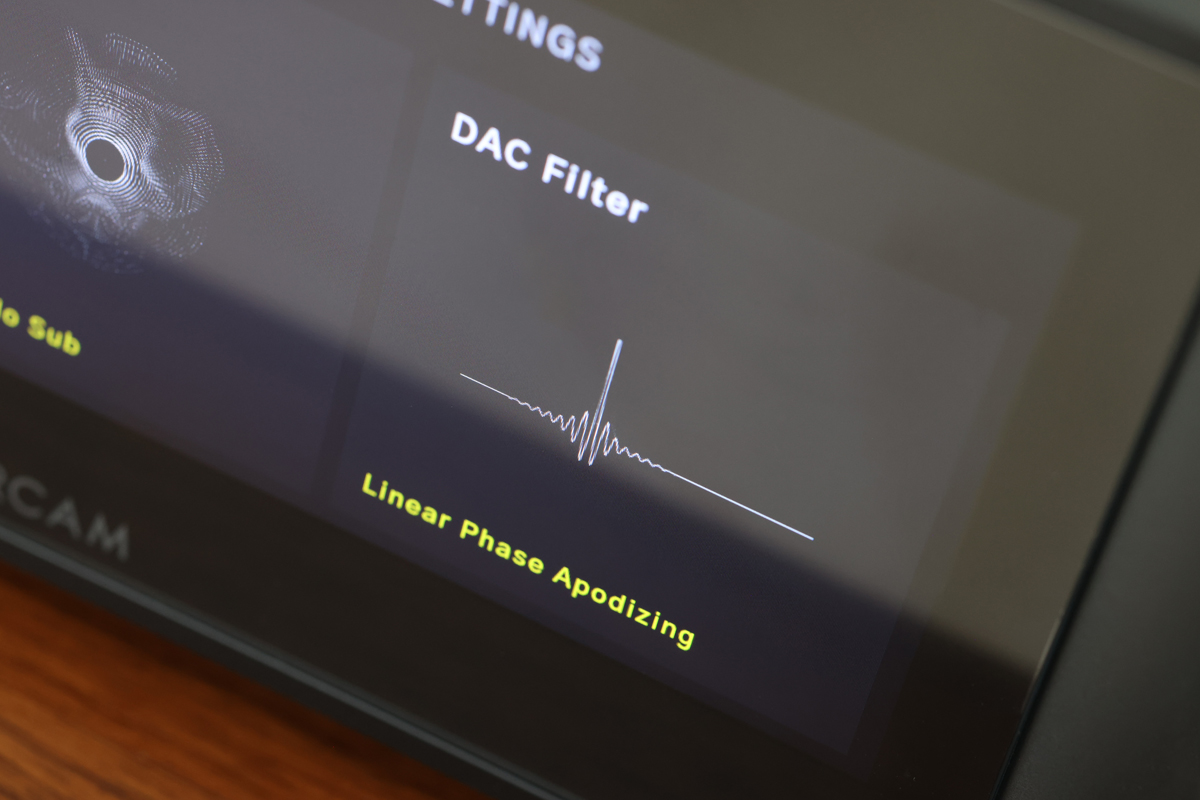
Digital-to-analog conversion is handled via an ESS chip whose exact model number is elusive, but Arcam lists it as belonging to ESS’s Hyperstream IV DAC architecture, which is flagship-level stuff. It features your choice of four reconstruction filters, including linear phase apodizing (default), minimum phase (you actually have to back up one spot to the left to see this one in the scrolling list of filters, so shout-out to years of right-running side-scroller games that taught me to run against the flow at first to find such little secrets), linear phase slow rolloff, and minimum phase slow rolloff.
The linear phase apodizing filter is the most technically accurate of the four, and technically accurate is the best sort of accurate, so that was the filter I used for most of my listening. Although, to be fair, the differences among them—even between the fast and slow rolloff filters—were subtle. Audible with some select source material, but subtle. Granted, I’m approximately 900 years old (±846 years) and my hearing acuity hits a brick wall just a little above 15kHz, so I can barely hear the frequencies where the slow rolloff filters start to work. Add salt to taste.
As mentioned, the Radia SA45 is rated at 180Wpc into 8-ohm loads (20Hz–20kHz, two channels driven) and 300Wpc into 4-ohm loads (1kHz, two channels driven). The back panel specifically mentions support for 4-to-16-ohm loads beneath its gorgeous five-way binding posts, and nothing in the literature mentions anything about more punishing loads, so caveat emptor if you’re rocking a pair of Wilson Chronosonic XVX loudspeakers.
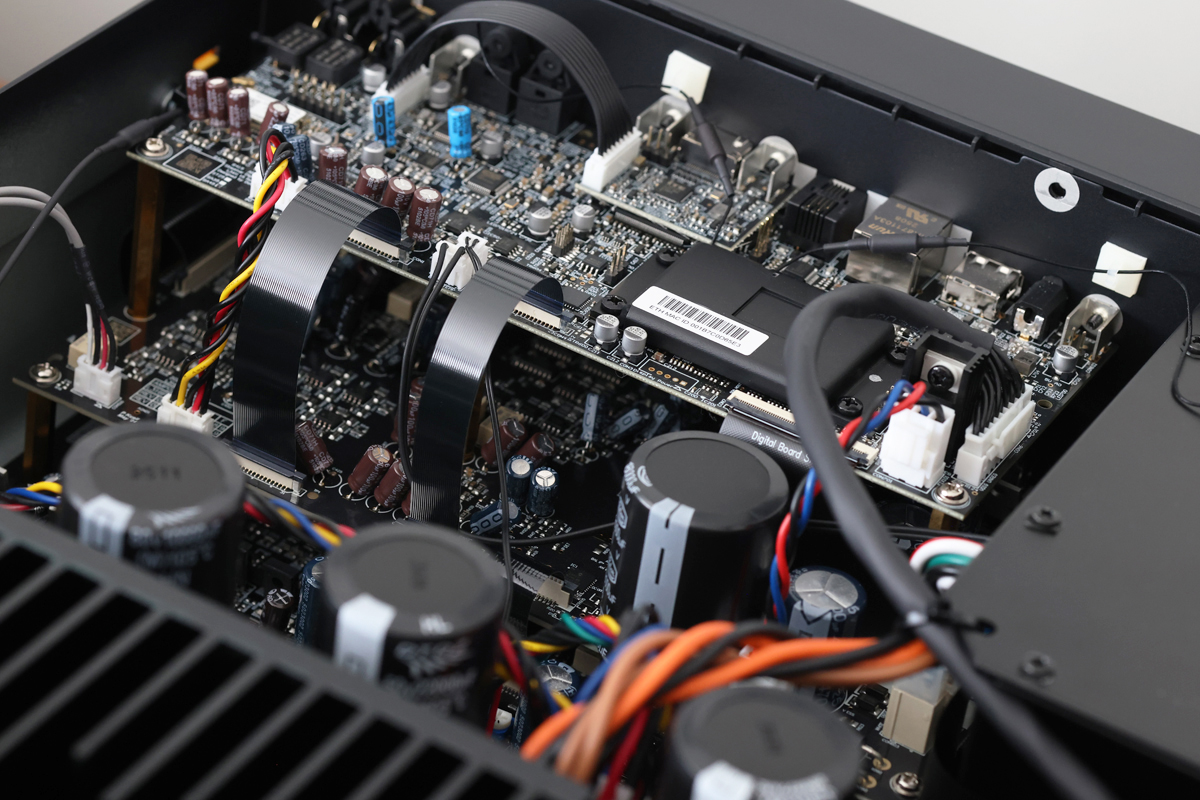
It’s also worth noting here that the SA45 is a heavy beast, tipping the scales at 37.5 pounds, which makes it less than pleasant to set up when you’re recovering from heart surgery. Ask me how I know. I had to rely on my wife’s assistance for installation and hook-up.
Setup and software
Right from the giddy-up, from the moment you connect the SA45 to power, its gorgeous 8.8″ screen makes you exceedingly aware of the amp’s connected nature by generating two QR codes that lead to iOS and Android versions of the Radia control app. So I followed the first link and redownloaded the app for my iPhone 16 Pro Max.
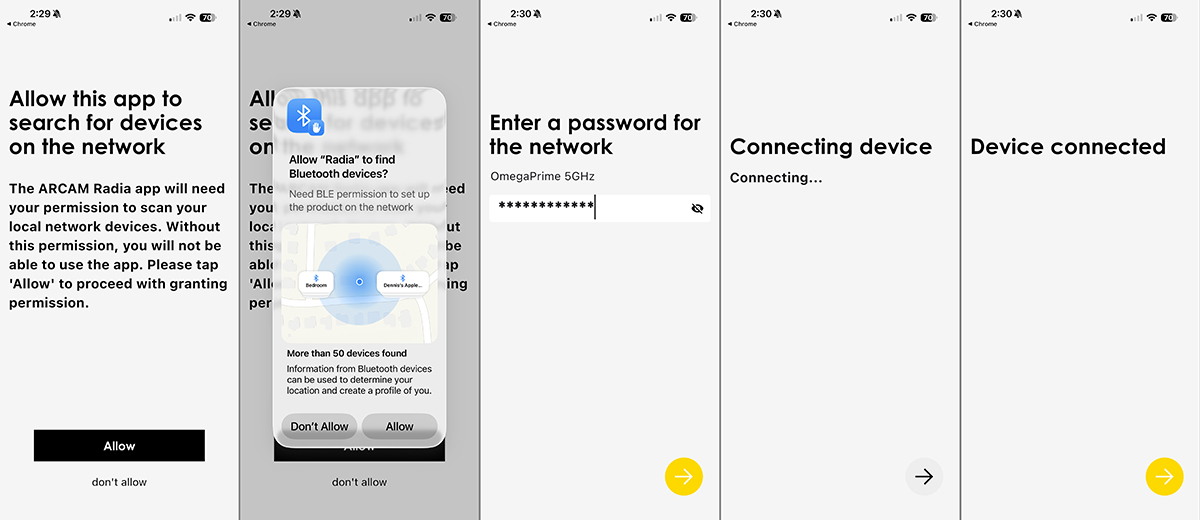
First contact with the app is promising if you’ve never used it before. If you’re not using ethernet, it’ll get you onto your Wi‑Fi network. It guides you through Google Cast setup, although not AirPlay setup (because AirPlay just works). Unless you plan on using the app to access files on a hard drive via UPnP (not recommended) or via the back-panel USB, though, there’s not a lot left for you to dig into via the app unless you’re an internet radio fan. You can set up presets to be accessible via the amp’s front panel—and those can be everything from playlists to internet radio stations to podcasts, although sadly the SoundStage! Audiophile Podcast and Audio Unleashed are both inaccessible via this particular walled garden.
By the way, when I said above that UPnP access isn’t recommended, it’s because the SA45 still suffers from the same bug I experienced with the company’s ST5 streamer: albums accessed from a hard drive over the network are presented with their songs arranged in alphabetical order, not track order, and there is no way to rearrange them. Interestingly, though, tracks accessed from a flash drive plugged into the back-panel USB‑A port are presented in album order, and even show track numbers preceding the track names.
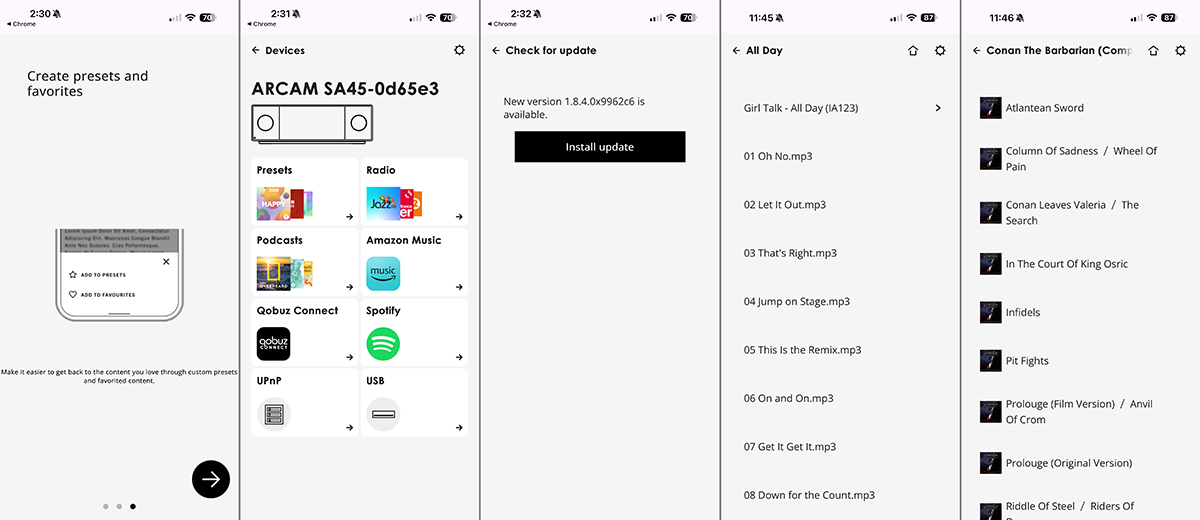
Aside from those functions, the app doesn’t do much. You cannot access the SA45’s setup functions. There’s no indication of Dirac capabilities. You can’t switch to any of the physical inputs. The only streaming services accessible therein are Amazon Music, Spotify, and Qobuz. However, Qobuz and Spotify access are both enabled via their Connect functions, not through the Radia app. As noted, the SA45 also supports Tidal Connect.
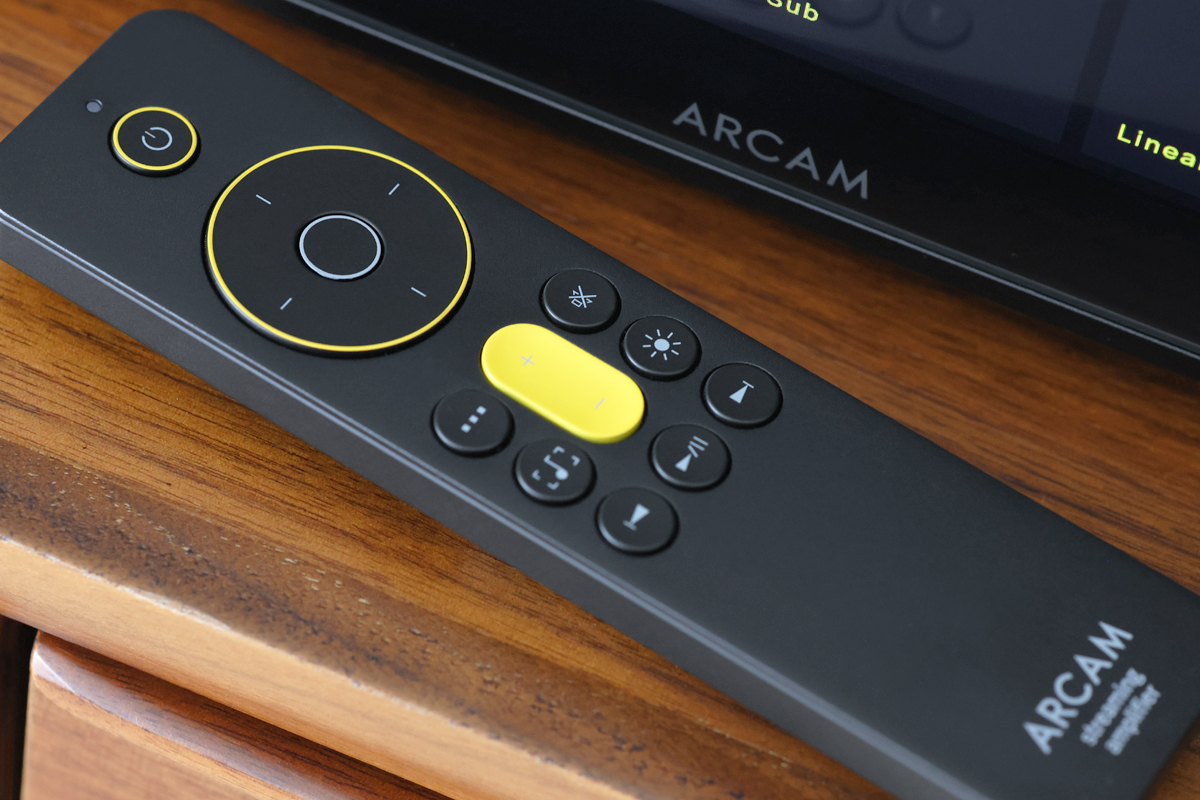
Via the front panel, using the included remote control, you can adjust more setup functions. These include selecting among the aforementioned reconstruction filters, adjusting the brightness of the halo lighting accents around the knobs, turning on one or both of the subwoofer outputs, balancing the audio left or right, setting maximum volume output (the default max is 40 out of 100, although I found that adjusting the volume via AirPlay could sometimes but not always push past this limit, which would occasionally make the amp stop playing audio altogether until it was put into standby and woken up again), turning on Pre Amp Mode to shut off the power amps, setting an eco timer (there’s no time adjustment here; this option simply puts the unit in standby mode after 20 minutes of inactivity), turning on Bluetooth and HDMI auto-switching, engaging TV volume control when using HDMI eARC, and some other housekeeping items.
You can initiate a USB firmware update via the front-panel controls, but you’ll need to use the Radia app if you want to update over the network. The pack-in literature for the unit indicates that it will automatically do an update the first time you power the SA45 on, but I didn’t find that to be the case. I had to force it via the app.
In none of the setup screens will you find anything allowing you to adjust the levels of the sub outputs independently, nor is there any bass management whatsoever. Turn on the sub or subs and both speaker-level outputs still operate full-range.
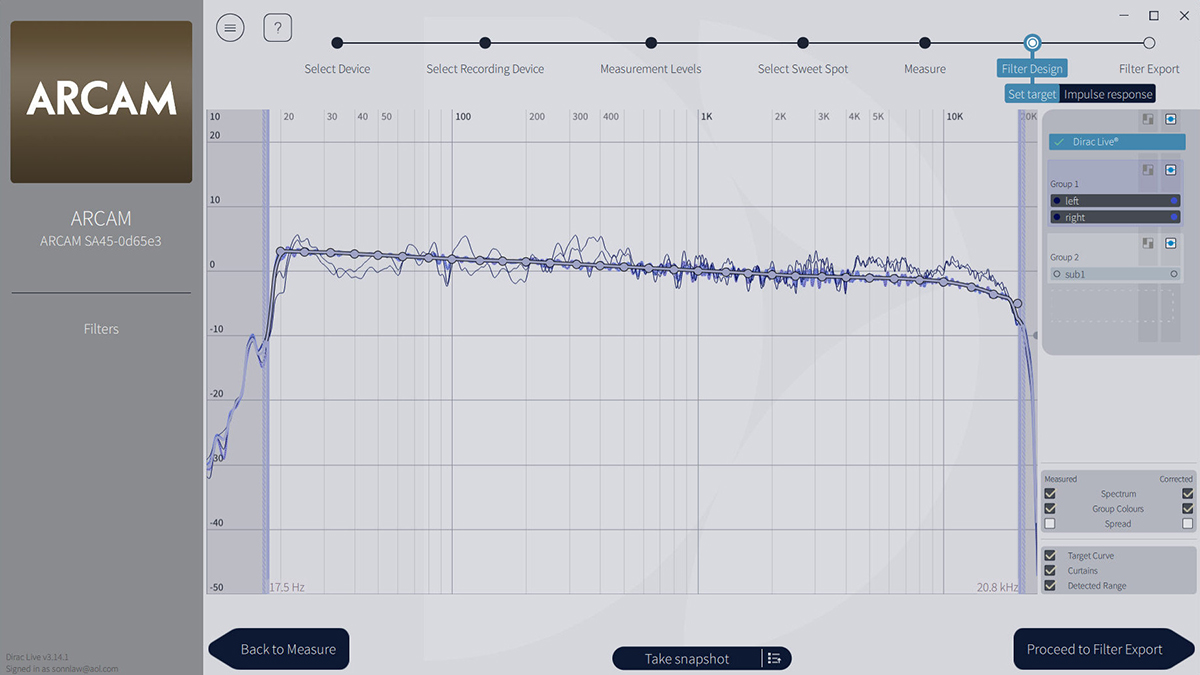
For that matter, I genuinely wonder if most normies will be able to figure out how to run Dirac Live Room Correction, although to be fair there is a breakdown of how to do so in the downloadable instruction manual.
The link you follow from the manual to download Arcam’s (i.e., Harman’s) target room curve for Dirac, as well as the mike-calibration file, leads to the wrong place, but you can find both in a ZIP file downloadable from the SA45 product page titled, confusingly, “ARCAM Radia & Dirac Live Quick Start Guide.” What’s nice, though, is that the SA45 ships with a calibration mike that mimics the aesthetic of the amp itself and connects via USB to your Windows or macOS machine.
I’ve seen reports indicating that the SA45 supports Dirac Bass Control and ART, and when you go to the Dirac download page for the amp, there’s some confusing language: “Please note that Bass Control and Active Room Treatment is only supported on Windows and MacOS.” But neither of those Dirac technologies is supported via the amp—only full-range or band-limited room correction are supported.

I loaded the calibration file for the included mike, ran Dirac Live, loaded the Arcam target curves, and configured both stereo and 2.1-channel setups before figuring out that I couldn’t do anything with bass management. So for the bulk of my testing, I turned off the output to my SVS SB‑1000 Pro subwoofer and relied on full-range and band-limited filters applied to my Paradigm Studio 100 v5 towers, connected using a pair of Elac Sensible speaker cables.
Both Dirac filters sounded excellent, which isn’t a surprise given that Arcam’s target curve largely followed the response of my speakers in my room, aside from evening out the response between 100 and 500Hz to a degree and—with the full-range filters—taming the output above 10,000Hz a tiny bit. Which is exactly what I’d want room correction to do in this room. Add bass management and this thing would be a dream from the perspective of DSP.
For the bulk of my testing, I relied on my iPhone 16 Pro Max and its Apple Music and Qobuz apps, as well as my Oppo BDP‑93 universal disc player connected via HDMI, coaxial digital, and stereo RCA.
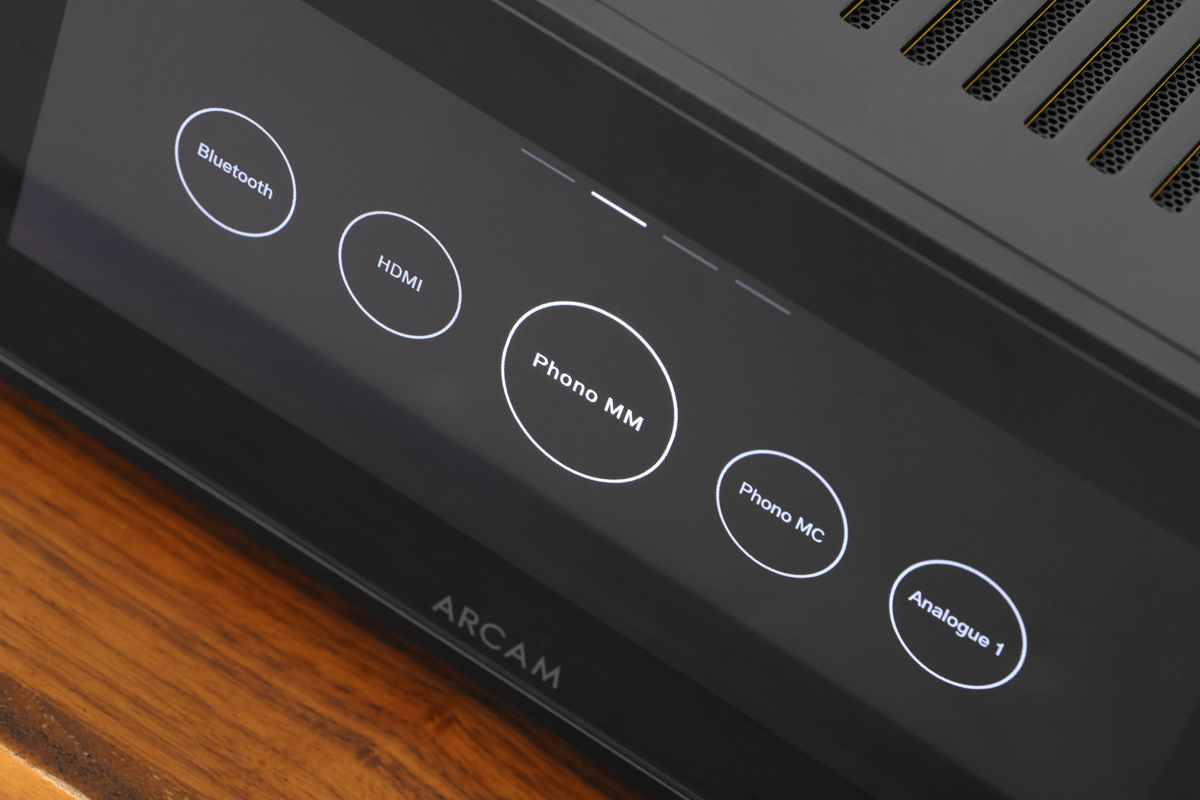
I also connected my U‑Turn Orbit Theory turntable to the MM input of the SA45, but didn’t use it much as a source because of a peculiar quirk of the turntable and the amp. The SA45 has a grounding screw for turntables, but the Theory doesn’t, grounding instead on its RCA output. The SA45 doesn’t play well with this type of turntable, and its MM input was plagued with RF interference and egregious hum that made it less than pleasant to listen to. I did spin a few records in order to discern that its RIAA equalization sounds neutral enough to my ears, but I couldn’t listen for long. And the MC input—to which I had nothing connected—was even noisier when I switched to it. So, long story short: if you’re going to connect a turntable to the Arcam SA45, make sure it’s one that’s compatible with a grounding wire.
Listening impressions
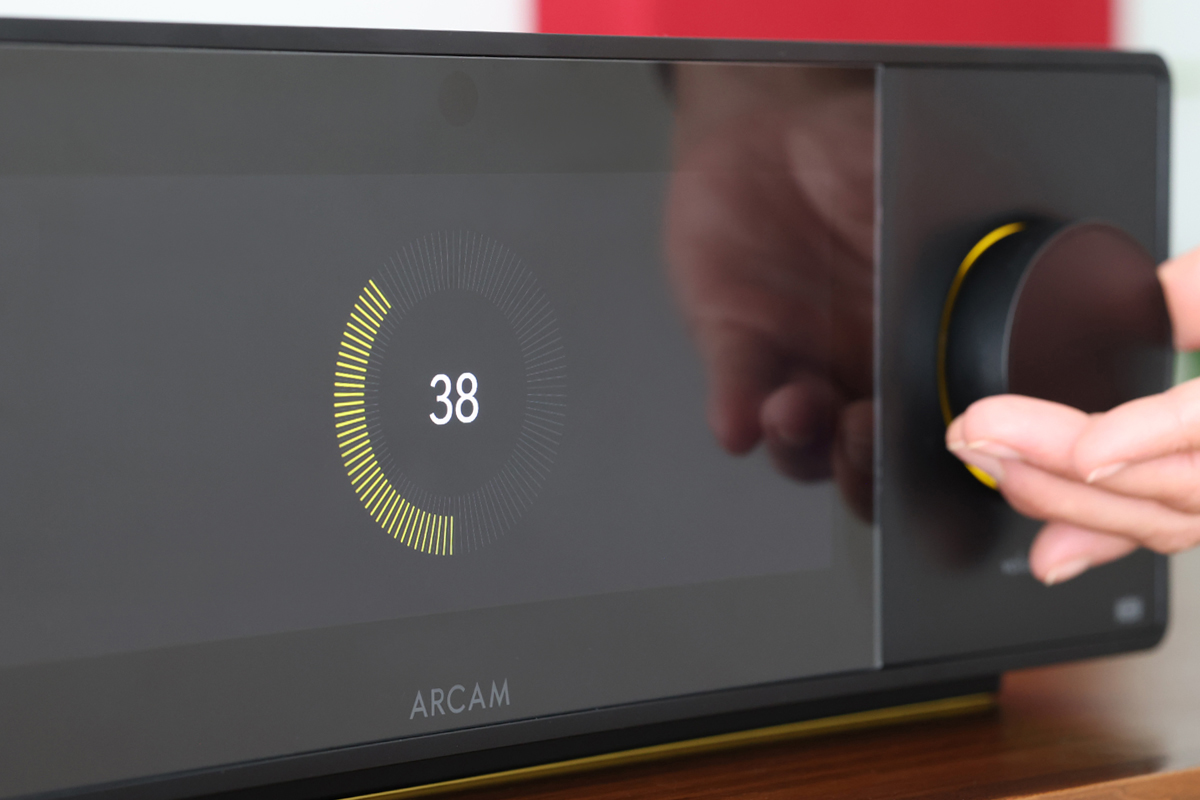
Here’s the first thing you can’t help but notice about the SA45 when you connect it to a pair of full-range speakers and just let it rip: this thing has so much freaking overhead, and it certainly seems to have that essential combination of low output impedance and high current that allows it to chuckle at the impedance swings of your speakers. As mentioned above, by default the maximum volume of the SA45 is set to 40 (out of a possible 100, with adjustments available in single-digit increments), but I couldn’t manage to sit in my 124-square-foot room with the system playing much louder than 35 for very long. That gave me peaks of around 109dB at my listening position—but it wasn’t merely the SPLs that impressed me; it was how strong and controlled the bass was, even at such high listening levels.
The bottom end of “The Thing,” the second single from Tomora’s upcoming album Come Closer (24‑bit/96kHz FLAC, UMO / Qobuz), was an outright revelation, pumping and pulsing and radiating into my room and through my chest with the utmost authority and composure, displaying a forcefulness that had me checking the settings to make sure I hadn’t turned my subwoofer back on and forgotten.
If you’re not familiar with Tomora, it’s a super-duo of sorts, comprising Norwegian singer/songwriter Aurora (the goddess of my newly established religion) and Tom Rowlands of the Chemical Brothers. It’s right there in the name: Tom + Aurora = Tomora. The meshing of their styles makes for some very interesting music, if that even needed to be said. You have Aurora’s pure, clean, angelic vocals combining with Rowlands’s gritty, gnarly, intense beats and electronic instrumentation.
The resulting work features oodles of lickety-split transients, a lot of textures, a ton of wild mixing and panning, and gobs of really ethereal singing that creates a diffuse wash over the whole affair. It was not merely a good test of the DAC and amps, but also of the volume control, which provided good precision and also good stability. I didn’t hear any audible deviations in soundstage and imaging as I adjusted the volume via the remote or the front-panel controls.
I released the kraken on the max volume a bit when playing this track, scooching it up to 50, and left the room to leave this song playing on a loop—because there’s no way I could have stayed in the room with it playing that loudly. I was mostly testing for how hot the chassis would get—a genuine consideration given that class-G amp topology is way more efficient than class-AB, but not as efficient as class-D. In terms of accumulated heat after a few hours of playing this punishing track, though, it behaved more like the latter than the former. The top of the amp was warm, to be sure, but nowhere near the scorching heat you’d get from a Marantz receiver after a few hours of movie playback. So the SA45 failed its stress-test as a space heater.
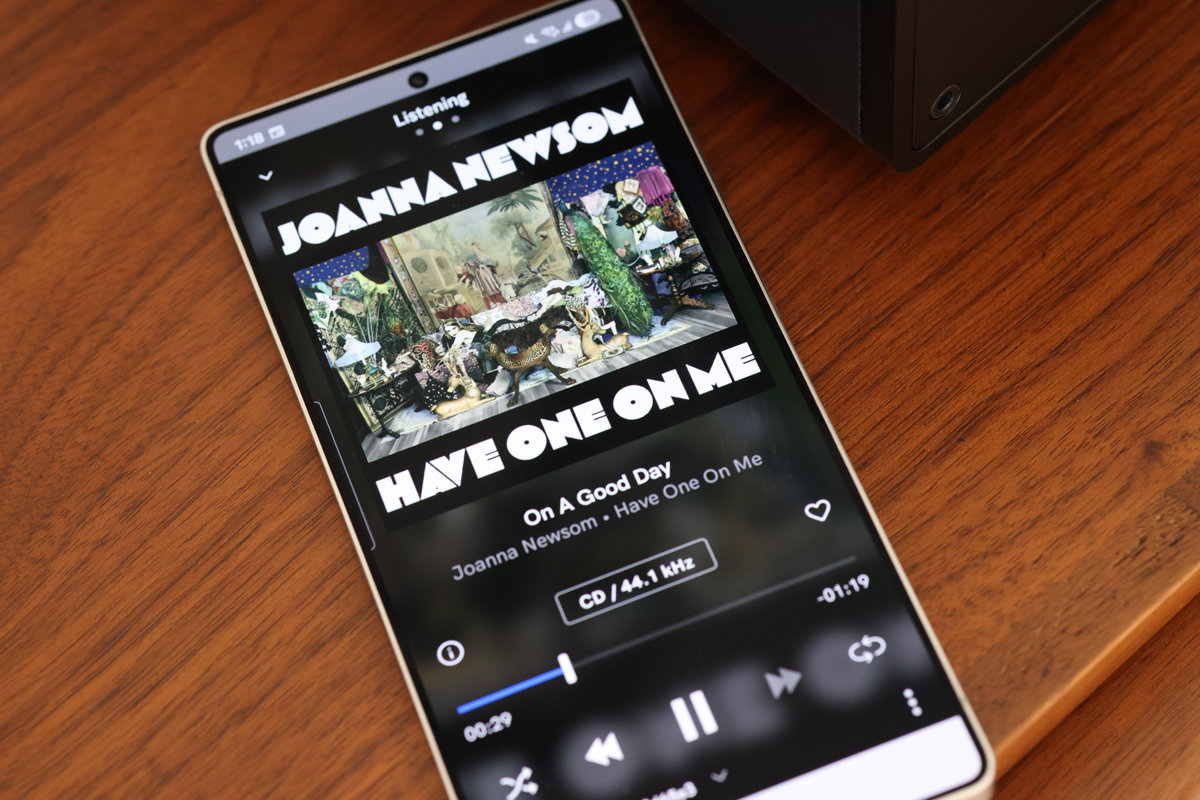
For a complete change of pace, I switched over to “On a Good Day” from Joanna Newsom’s Have One on Me (16/44.1 FLAC, Drag City / Qobuz), which is a lot less dense a mix, given that it’s just Newsom’s voice and harp. It was a good test of whether any of the DAC’s reconstruction filters were doing anything stupid, though, given that it’s CD resolution. They weren’t—doing anything stupid, that is. In fact, they all sounded good, and if you’re particularly sensitive to very high frequencies, you might appreciate one of the slow-rolloff filters, neither of which starts rolling off at too low a frequency. It was really only with this track that I noticed a difference between the filters, and what I heard was mostly some taming of the analog tape hiss that permeates the track when relying on the slow-rolloff filters. Again, though, it was an exceedingly subtle difference and mostly down to a matter of preference. They all sounded great, and anyone who knows me knows how much it pains me to praise a minimum-phase slow-rolloff LPF.
Let’s move past the issue of reconstruction filters, if only for a paragraph. I was really mostly drawn into the clarity and purity of the SA45’s delivery of this incredibly intimate recording. The attack of the harp strings and the decay of Newsom’s voice in the room were absolutely unimpeachable. Soundstage and imaging were perfect. There’s simply nothing you could criticize here in terms of audio performance.
Curiously, while the Newsom track did reveal some subtle audible differences among the reconstruction filters, my go-to album for analyzing such distinctions revealed none of any consequence. “The Cormorants” from Andrew Bird’s Echolocations: River (16/44.1 FLAC, Wegawam Music Co. / Qobuz) will normally let me hear anything going on with the phase response of these sorts of filters, largely due to the album’s distinctive mix of very sharp transients with an overall tonal balance that resembles pink noise in many respects. I certainly expected to hear the difference between the linear-phase apodizing and the slow-rolloff minimum-phase filters with this one, but I heard none, which had me doubting my ears and my brain—and also made it clear that I need to do my annual self-administered hearing test very soon. The only thing that made me somewhat less convinced that the problem existed between speaker and brain was that, with my wife switching inputs, I could identify those very small but perceptible differences with “On a Good Day.”
So take that for what it’s worth. What I like is that Arcam (or ESS, I reckon) is giving people the opportunity to experiment with different reconstruction filters here, effectively giving customers four DACs to swap between. That sort of tinkering is really fun, and is an essential element of the hi‑fi hobby for many. And I may have a theoretical preference for one of the four filters, but in practice all of them sound excellent and don’t do any harm to the signal.
Comparisons
So, you’ve got US$5500-ish to spend on a streaming integrated amplifier, and you’re wondering what else might be worth your scratch. I mentioned above my fondness for Arcam, and I should also point out here that I’m massively biased in favor of NAD, so I wish that company had something roughly equivalent for me to recommend, but the Masters-series M10 V3 (US$2999), the integrated amp I covet with all my heart, all my mind, and all my body, doesn’t offer anything resembling the I/O options or the beastly output of the SA45’s amp section. So it’s not a fair comparison.
You’d really be looking at something like the Anthem STR integrated amplifier (US$4999.99), which adds an extra analog input, a USB‑DAC connection (type B), and Anthem Room Correction. It lacks the SA45’s HDMI eARC port, though, as well as its Bluetooth and wireless network connectivity, so you’d need to bring your own streamer to the party.
Conclusion
When I was a wee lad, my meemaw had what she called the “cousin shirt.” If any of my cousins and I got into a squabble while at her house, she’d make us climb into this oversized shirt together, sharing the neckhole but forced to fill one sleeve apiece. It was a bit more punitive than I can get behind these days, but it did force us to work together if we wanted to accomplish anything—even something as simple as changing the TV channel.
Somebody at Arcam needs a meemaw like mine to step in and make the firmware, software, hardware, and app-development teams wear a cousin shirt for a while, because for all its strengths, the SA45 just doesn’t get along with itself. Switching inputs via the front panel is fine: twist and boop a knob and you’re done. Changing inputs via the remote is a fit-pitching nightmare, as there isn’t a dedicated input carousel button, much less individual input keys. And the app will only let you switch to virtual inputs. Plus, who on earth thought it was a good idea to include (and tout!) dual subwoofer outputs but not add any sort of bass-management capabilities?

The issues with UPnP won’t affect most people, granted. And I suspect my experience with the noisy phono input was an edge case. Most turntables have ground terminals, and presumably this won’t be an issue with turntables that, unlike mine, can be externally grounded. (Our lab measurements should confirm whether or not this is the case.)
Still, though, it feels weird to be making excuses for a $5500 integrated amp. And to be clear, in terms of digital-to-analog conversion, processing, and amplification, there’s nothing to apologize for here. The SA45 is a nuanced beast of a thing that could drive a dump-truck up a 45-degree incline while juggling porcelain teacups and composing haiku. It’s an absolute animal when it comes to sheer sonic performance—especially if you’re in a larger room or have difficult-to-drive speakers (within reason, meaning a nominal impedance of 4 ohms or above).
But the ergonomic issues plaguing it puzzle me to no end.
The good news is, almost all of those things could be fixed with a software redesign and a new app. And if you’re just using AirPlay, Google Cast, or Whatever Connect to stream music to it, most of those issues are of little consequence anyway.
. . . Dennis Burger
Note: for the full suite of measurements from the SoundStage! Audio-Electronics Lab, click this link.
Associated Equipment
- Speakers: Paradigm Studio 100 v5
- Subwoofer: SVS PB-1000 Pro
- Sources: iPhone 16 Pro Max; Oppo BDP-93
- Speaker cables: Elac Sensible
- Power conditioner: SurgeX XR115
Arcam Radia SA45 streaming integrated amplifier
Price: US$5499.95, CA$7999, £4499, €4998
Warranty: Five years, parts and labor
Arcam
The West Wing
Stirling House
Waterbeach
Cambridge CB25 9PB
UK
Phone: +44 (0) 1707 668012
Website: www.arcam.co.uk